A field guide to the Bunker.
There is quite a bit tucked away in here. A history question can turn into a party-lineage rabbit hole. A fossil can lead to a map, a research paper and another question. Sometimes you just want a story.
This is the lay of the land. Open a bullet for the details, or switch to tiles and open a collection right here. Follow the link when you are ready to use the tool or read the piece.
Open a bullet to read more. Each entry has a link to the working file.

Understanding America.Today
Start with a president, a party or a turning point. Follow the connections, then look at the evidence behind the interpretation.
Fantasy classes and alignments are editorial readings. The voter and skills tools use dated datasets, with their limits kept in view.
American History Timeline
Explore nine editorial eras, compare turning points, and follow the sources behind events and their interpretations.
Open American History TimelineAmerican Political Cycles
Scrub seven party systems, compare coalitions, and examine competing interpretations of political realignment.
Open American Political CyclesThe Imperial Presidency
Trace executive expansion alongside congressional, judicial, and electoral constraints, with linked historical context.
Open The Imperial PresidencyAmerican Party Braid
Explore party lineages and relationship assessments. A connection shows historical lineage, not an unchanged ideology.
Open American Party BraidPresidents as D&D Characters
Compare evidence-backed fantasy character readings of 45 presidents and assemble a five-president party. Classes are creative interpretations.
Open Presidents as D&D CharactersPresidential Class Hall
Explore 45 history-inspired Warcraft class portraits, compare interpretations, and read sourced quotations in context. An unofficial fan project.
Open Presidential Class HallPresidential Alignment Lab
Examine nine ethical alignment categories, historical rationales, and counterarguments. These are contested editorial readings, not objective ratings.
Open Presidential Alignment LabThe Presidential Reckoning
Match presidents to their actions in a ten-question history challenge and compare your score with the public scoreboard.
Open The Presidential ReckoningAmerican Voter Observatory
Compare a curated subset of five ANES election studies with question-specific weights and visible limits. Descriptive differences are not causal proof.
Open American Voter ObservatoryANES Question Lab
Inspect questionnaire wording, response codes, exclusions, and split-sample context before interpreting a survey estimate.
Open ANES Question LabAmerican Skills Atlas
Explore NCES adult literacy and numeracy estimates, compare places, and keep source dates and uncertainty in view.
Open American Skills AtlasUA.T Research Search
Find connected records across the UA.T workspace and jump directly to the relevant historical or research context.
Open UA.T Research SearchSaved Research Notebook
Keep a research thread in your browser, save useful records, and export your notebook. Local storage is not a cloud backup.
Open Saved Research NotebookThe Amerisphere
Distinguish territories, legal authority and sovereign partners, then explore separate U.S.-linked founding histories.
Open The AmerisphereHistory
Start with the timeline, then connect political cycles, party lineages and executive power. Open a collection when you want the records and sources behind an era or argument.
Open HistoryPresidents
Choose a presidential lens, with factual records separated from interpretive character assignments.
Open PresidentsDragon Ball Z characters
Explore presidents as Dragon Ball Z characters, with creative pairings, historical context and counterpoints.
Open Dragon Ball Z charactersHarry Potter characters
Explore 45 presidents as Harry Potter characters, compare three, and inspect historical context and counterpoints.
Open Harry Potter charactersLord of the Rings characters
45 presidents as Lord of the Rings characters, with historical context, comparisons, and a fellowship builder.
Open Lord of the Rings charactersResearch
Choose voter research, adult skills or a saved notebook. Keep the source dates, question wording and uncertainty beside the numbers you compare.
Open ResearchResearch relationships
Explore the relationships among the site’s research records and their linked evidence.
Open Research relationshipsMethods & evidence
Understand the distinction between sourced facts, editorial interpretation and entertainment.
Open Methods & evidenceSpace
Explore America’s space programs, institutions and industry in their international context, with explicit handoffs to the independent Second Space Race for global coverage.
Open SpaceAmerica in Space · with Second Space Race
Investigate America’s space programs, capabilities and public relationships in their global context.
Open America in Space · with Second Space RaceSpace Explorarium
Filter missions, compare up to three and save a source-linked research brief.
Open Space ExplorariumFind an island or place
Search reviewed names, aliases and parent territories without inflating territory counts.
Open Find an island or placeConstituent islands
Explore islands within their parent territories and keep constituent geography distinct.
Open Constituent islandsMaritime jurisdiction
Distinguish territorial waters from limited maritime rights and resource jurisdiction.
Open Maritime jurisdictionTribal and federal overlays
Read tribal sovereignty and federal authority as distinct, overlapping legal contexts.
Open Tribal and federal overlaysOverseas controlled or leased sites
Separate host-country sovereignty from U.S. control and site-specific lease arrangements.
Open Overseas controlled or leased sitesFreely associated countries
Meet sovereign compact partners, clearly separate from U.S. territories.
Open Freely associated countriesDisputed and historical claims
Compare dated claims, administration and case-specific legal findings.
Open Disputed and historical claimsLaw beyond sovereign territory
Understand how legal authority can extend beyond sovereign territory.
Open Law beyond sovereign territoryHistorical relationships
Explore independence, occupation, security partnerships and other distinct histories.
Open Historical relationshipsAnnexation and territorial expansion
Distinguish annexation, colonial cession and Indigenous dispossession with continuing sovereignty.
Open Annexation and territorial expansion
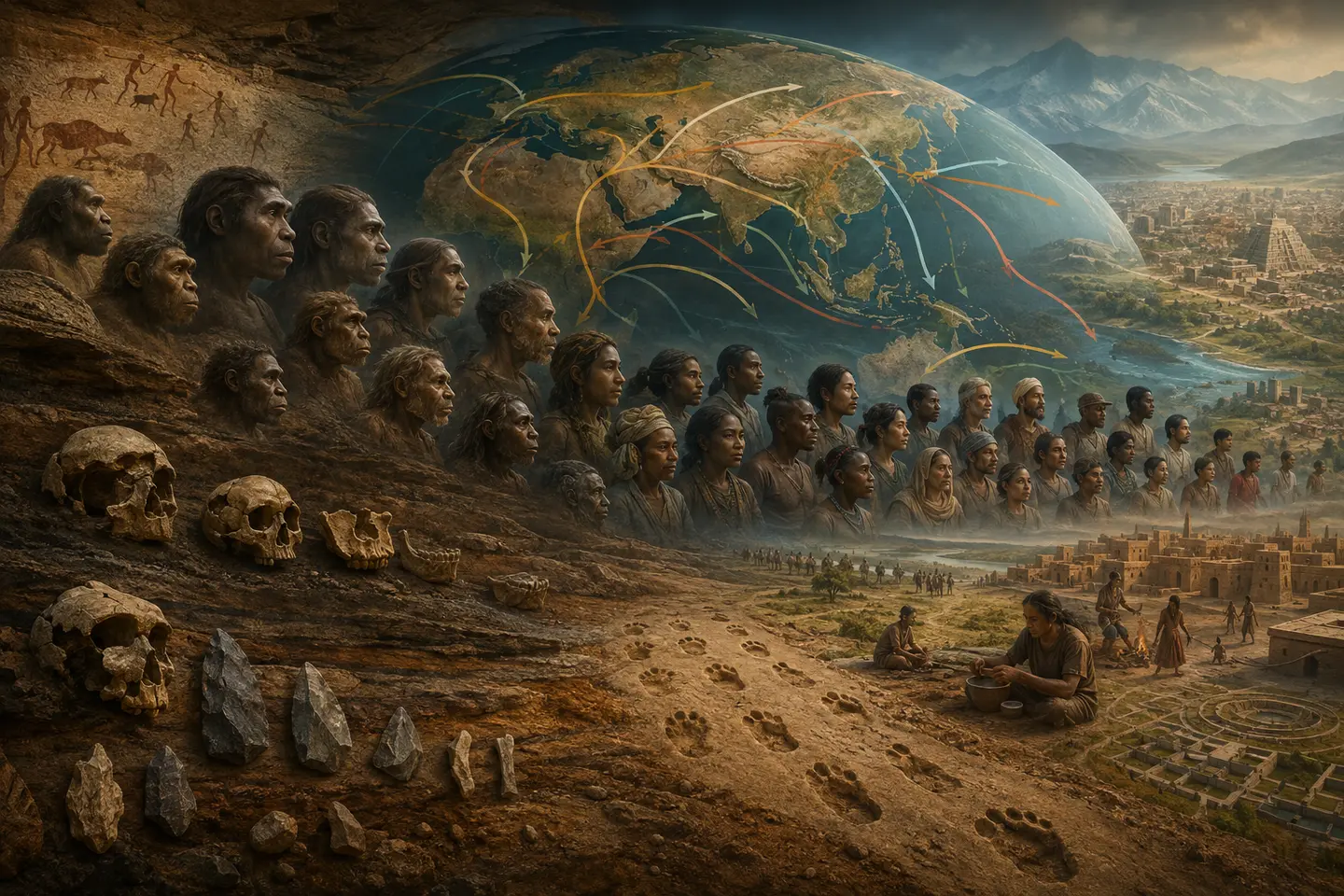
We Are What’s Left
The human story has branches, overlaps and a lot of unfinished arguments. WAWL brings the people, places and evidence into the same picture.
Species pictures are reconstructions. Sources and uncertainty matter more than a tidy family tree.
The Story So Far
Follow the branching human story through deep time. Pause at a turning point, examine the fossil or discovery behind it, and keep uncertain placements separate from established relationships.
Open The Story So FarHuman Family
Meet human species, ancestral populations and side branches. Use the family view to connect a name with its anatomy, place in time and the evidence behind its proposed relationships.
Open Human FamilyCurrent Understanding
Get your bearings in the current picture of human life: food, tools, relationships, adaptation and community. Read the evidence notes alongside reconstructions rather than treating an illustration as a fossil record.
Open Current UnderstandingAtlas
Explore the human past by time and place. Move through the timeline, search the map and open a record to examine the sources and uncertainty behind its position.
Open AtlasReports
Read species and population dossiers in greater detail. Connect anatomy, chronology and relationships with their sources, and check which questions remain unsettled.
Open ReportsPlants + Animals
Explore plants and animals in the human story. Follow cultivation, domestication, hunting and other relationships while keeping species, populations and human-made varieties distinct.
Open Plants + AnimalsCivilizations
Explore early cultural and technological worlds through their surviving material evidence. Check the scope of each record; the collection does not imply that every later civilization is already covered.
Open CivilizationsNews
Read research reporting and updates, with dates and sources close to the finding. Follow the underlying paper before extending a reported result beyond its stated evidence.
Open NewsTheories
Inspect competing explanations and the evidence used to support them. Compare what an explanation predicts with what has been observed, and keep open questions visible.
Open TheoriesAbout the Evidence
Review the methods, confidence labels, citations and ethical boundaries behind the archive. Use it to understand how the site distinguishes observation, inference and illustrative scenarios.
Open About the EvidenceEvidence Workspace
Inspect evidence coverage, claims and source changes in a dedicated workspace. Follow a claim back to its record and use the visible limitations when deciding how much weight it can carry.
Open Evidence WorkspaceDiscoveries
Explore archaeological and evolutionary findings and their implications. Follow the dated evidence behind a discovery, including the limits that can be lost in a short headline.
Open DiscoveriesResearch
Browse research findings and their supporting sources. Use the linked records to distinguish a new observation from an interpretation or a question that still needs better evidence.
Open ResearchScientific Monitoring
Inspect the source-update and research-monitoring status. A successful source check is a statement about coverage and retrieval; it is not independent verification of every scientific claim.
Open Scientific MonitoringKnown Unknowns
Look directly at gaps in the evidence and questions that remain open. Use them as starting points for investigation rather than filling the missing pieces with a neat story.
Open Known UnknownsProblematica
Explore disputed taxa, unstable names and mismatches between classifications and lineages. Read the competing placements and the evidence needed to settle them.
Open ProblematicaPublic Claim Registry
Inspect public claims together with their review dates and revision histories. Follow changes over time instead of assuming that a once-published interpretation is permanent.
Open Public Claim RegistryIn Review
Read selected monthly, yearly and decade reviews of research. Each review has its own coverage window and limits; a selected synthesis is not a complete census of the literature.
Open In ReviewSource Registry
Find source records and the parts of the archive that cite them. Use the registry to move from a summary to the underlying paper or other original evidence.
Open Source RegistryCorrections
Follow changes to the evidence record. Check what was corrected and why, keeping scientific revisions separate from ordinary interface updates.
Open CorrectionsCoverage
Inspect where the archive has evidence and where it has gaps. Use the coverage context before treating an empty area or an absent record as proof of absence.
Open CoveragePublic Feedback
Report a problem, suggest a source or raise a concern about a record. Give the relevant page and evidence so the issue can be examined in context.
Open Public FeedbackCulture Before Us
Explore material and social evidence for human cultural life. Keep the surviving objects and observations alongside the interpretations drawn from them.
Open Culture Before UsFood + Cooking
Explore food, cooking and ecological relationships in the human past. Follow the evidence for an activity without assuming that every plausible reconstruction is directly observed.
Open Food + CookingMade by Humans
Explore plants, animals and other life shaped by people. Compare breeding, cultivation and other human influences while preserving the biological and historical distinctions.
Open Made by HumansHigh-impact Events
Explore changes with major consequences across human history. Read each event in its place and time, including the evidence limits around its proposed impact.
Open High-impact EventsFrom the Desk
A planned home for essays and field notes by A.R. Schneider. This destination currently introduces the collection; it is not a claim that the full essay archive is published.
Coming soon — this destination currently describes planned work.Open From the DeskMedia Library
Browse videos, playlists and teaching materials. Check the access labels and source context before using a media item as evidence for a particular claim.
Open Media LibraryClassroom Studio
A planned studio for guided classroom investigations. The page describes the direction of the work; it is not an available course or a completed learning program.
Coming soon — this destination currently describes planned work.Open Classroom StudioCompare Records
Open records side by side in the comparison workspace. Change the selection and examine relationships, evidence and differences without losing the context of each record.
Open Compare RecordsEnrichment Lab
A planned set of ways to turn curiosity into stronger research questions. Read the current direction here while the broader tools remain in preparation.
Coming soon — this destination currently describes planned work.Open Enrichment LabVisual Insights
Explore visual explanations of evidence and relationships. Read the accompanying labels so a diagram or reconstruction is not mistaken for a direct measurement.
Open Visual InsightsResearch Transfer
Planned tools for taking research between workspaces. The current page describes that direction; do not rely on it as a completed backup or migration service.
Coming soon — this destination currently describes planned work.Open Research TransferCommunity Standards
Read the community rules and limits on participation. These standards explain the expected conduct and evidence boundaries around contributions.
Open Community StandardsPrivacy
Read the site’s explanation of data use and contact information. Check this page before sharing personal information or using a feature that stores research.
Open Privacy
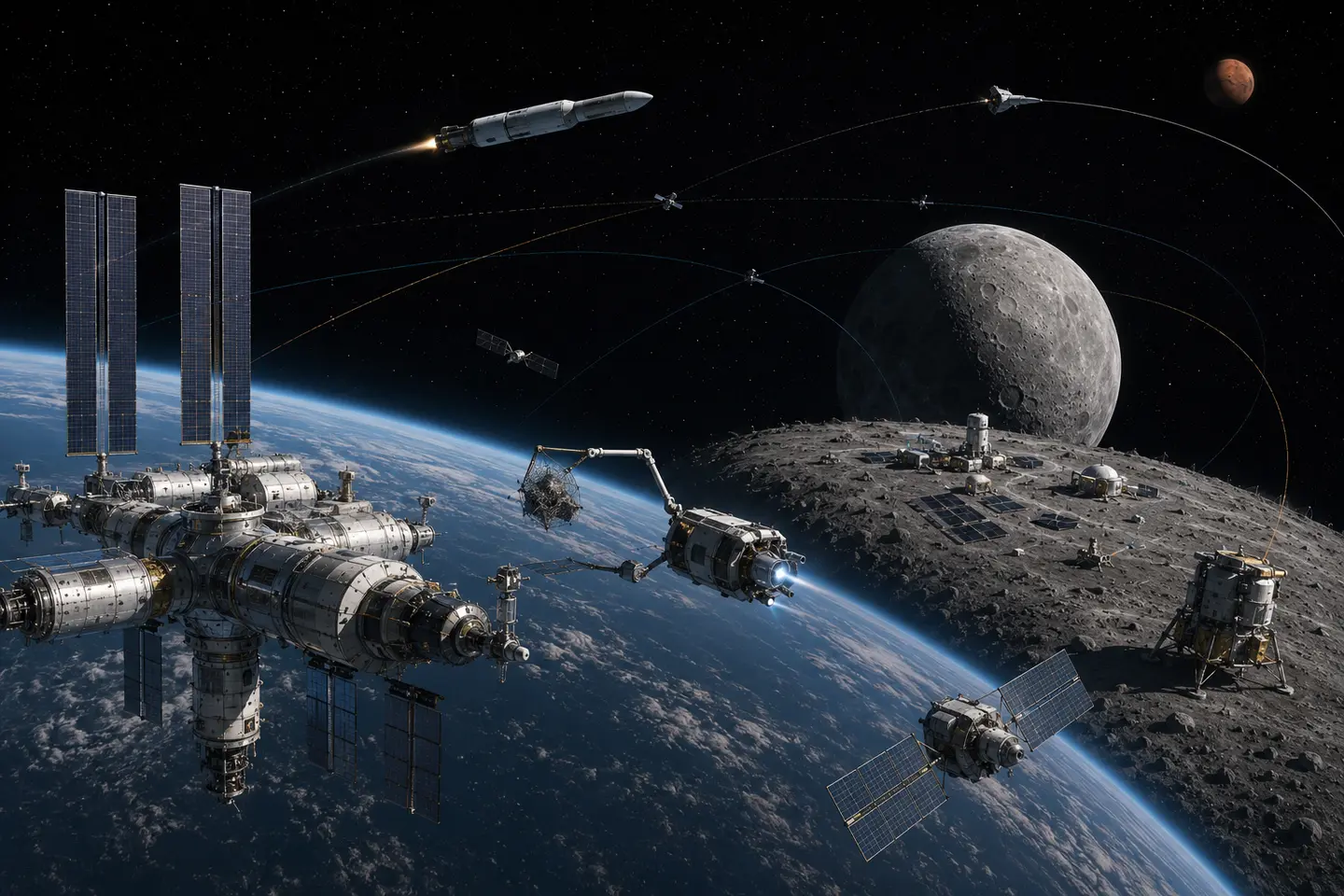
The Second Space Race
Follow the programs, companies, missions and infrastructure taking shape from Earth orbit to deep space.
2SR is an independent global project. UA.T’s America in Space covers American activity and documented U.S. partnerships.
Operating Picture
Explore the mission picture from Earth orbit to deep space. Filter by era, actor and destination, then inspect a mission and its primary source.
Open Operating PictureGlobal Registry
Browse programs, organizations and destinations worldwide, with the evidence quality visible beside the record.
Open Global RegistryStrategic Domains
Explore defense, infrastructure, governance, industrial capacity and planetary frontiers as connected parts of the space sector.
Open Strategic DomainsTimeline + Saved
Follow dated events, keep a watchlist and return to saved research. Publisher health is shown separately from the claims being reported.
Open Timeline + SavedExplore + Compare
Inspect organizations, missions and their relationships, compare records and follow the claim trails.
Open Explore + CompareDecision Lab
Try transparent weighting, delay-propagation and orbital-remediation models. These are teaching scenarios, not operational forecasts.
Open Decision LabMethods + Health
Read the methods, source-health notes and quality checks behind the workspace.
Open Methods + HealthAmerica
Explore the United States government, industry and mission system within its international context.
Open AmericaSpace Economy
Look at companies and the emerging industrial capabilities around launch, services and infrastructure.
Open Space EconomyBriefing
Read material changes and examine the evidence behind the assessment.
Open BriefingOrbital Cleanup
Explore debris prevention, servicing, capture and disposal programs, keeping proposed capabilities distinct from deployed systems.
Open Orbital CleanupMissions
Browse featured missions from Earth orbit to the outer planets and follow their evidence.
Open MissionsIndustry
Explore spacefaring nations, state primes and commercial organizations.
Open IndustrySpace Elevators
Read about lunar elevators, tether research, climbers and terrestrial concepts. Research concepts are not operating infrastructure.
Open Space Elevators

Behind the Txts
Twenty-three pieces of late-night comic fiction from 2009–2010, recovered with their dates, stories and a visual identity of their own.
Some stories contain adult themes. Each story keeps its content notes and acknowledgment at the reading page.
The Case of the Missing Saturday
An unexpected delivery turns a carefully planned day off into a missing Saturday.
18+ · Mature themesOpen The Case of the Missing SaturdayI’ve always wanted to use doilies as napkins or Napkin Doilies
A quiet corner of the world becomes a much messier relationship story.
18+ · Mature themesOpen I’ve always wanted to use doilies as napkins or Napkin DoiliesThe Sites of Porcelainia
A change of scenery leads to a road trip and a less-than-glamorous morning after.
Mature themesOpen The Sites of PorcelainiaComplaints Don't Make Good Bait According to Jesus
A night at the bar takes an uncomfortable turn in this piece of irreverent comic fiction.
18+ · Mature themesOpen Complaints Don't Make Good Bait According to JesusIt's a Queen's Castle After All
A rum-fueled royal dream collides with an altogether different morning.
18+ · Mature themesOpen It's a Queen's Castle After AllIt's a Man Thing
Three generations discover that new technology does not necessarily improve family communication.
Mature themesOpen It's a Man ThingShakespeare, you bastard
A literary observation meets a bad night and some very questionable decision-making.
Mature themesOpen Shakespeare, you bastardI like food ttttthhhiiiiissssss much
Choosing a favorite food turns into a surprisingly serious personal dilemma.
Mature themesOpen I like food ttttthhhiiiiissssss muchKanye, you're off the Island.
A watch becomes the starting point for an elaborate theory about appearances and belonging.
Mature themesOpen Kanye, you're off the Island.This just in Peter Griffin has a U.T.I.
A restaurant shift becomes a sharply exaggerated rant about customers and conversation.
Mature themesOpen This just in Peter Griffin has a U.T.I.Biggest. Con. Ever
An early-adulthood reckoning becomes a chaotic story about work, relationships, and expectations.
18+ · Mature themesOpen Biggest. Con. EverNewsflash: Mortal Kombat 64 < WWE64
Video-game confidence meets real-world consequences in an ill-advised wrestling match.
Mature themesOpen Newsflash: Mortal Kombat 64 < WWE64Ninja.Pirate.
A night out becomes an increasingly elaborate contest of confidence and one-upmanship.
Mature themesOpen Ninja.Pirate.Dessert a la Crisco
Two friends sort through an unexpected loss in a story with dark and sexual humor.
18+ · Mature themesOpen Dessert a la CriscoOf Pongcases and Victory
A beer-pong winning streak takes on the proportions of an epic sporting rivalry.
Mature themesOpen Of Pongcases and VictoryOf Bikes and Broken Rides
A grand plan for a night out runs into the practical problem of getting around.
Mature themesOpen Of Bikes and Broken RidesWater Cooler Talk
A long relationship and an ordinary morning become an unpredictable comic exchange.
Mature themesOpen Water Cooler TalkMoneyshot the Stars
A childhood memory of meteor showers inspires a very different late-night message.
Mature themesOpen Moneyshot the StarsNew York! New York!
A first visit to New York produces a fast-moving collection of unexpected encounters.
Mature themesOpen New York! New York!Classfied Operation: Cockblocking Robot
A social rivalry becomes a wildly overblown secret operation.
Mature themesOpen Classfied Operation: Cockblocking RobotThank God for Taxis
Two friends compete for attention on a night out, with predictably awkward results.
Mature themesOpen Thank God for TaxisSilent Cocoa Nighcap
A late-night chocolate mission meets a surprisingly alert sleeping partner.
Open Silent Cocoa NighcapNever 21 Again
A long-awaited twenty-first birthday becomes a day of increasingly unreliable memories.
Mature themesOpen Never 21 Again
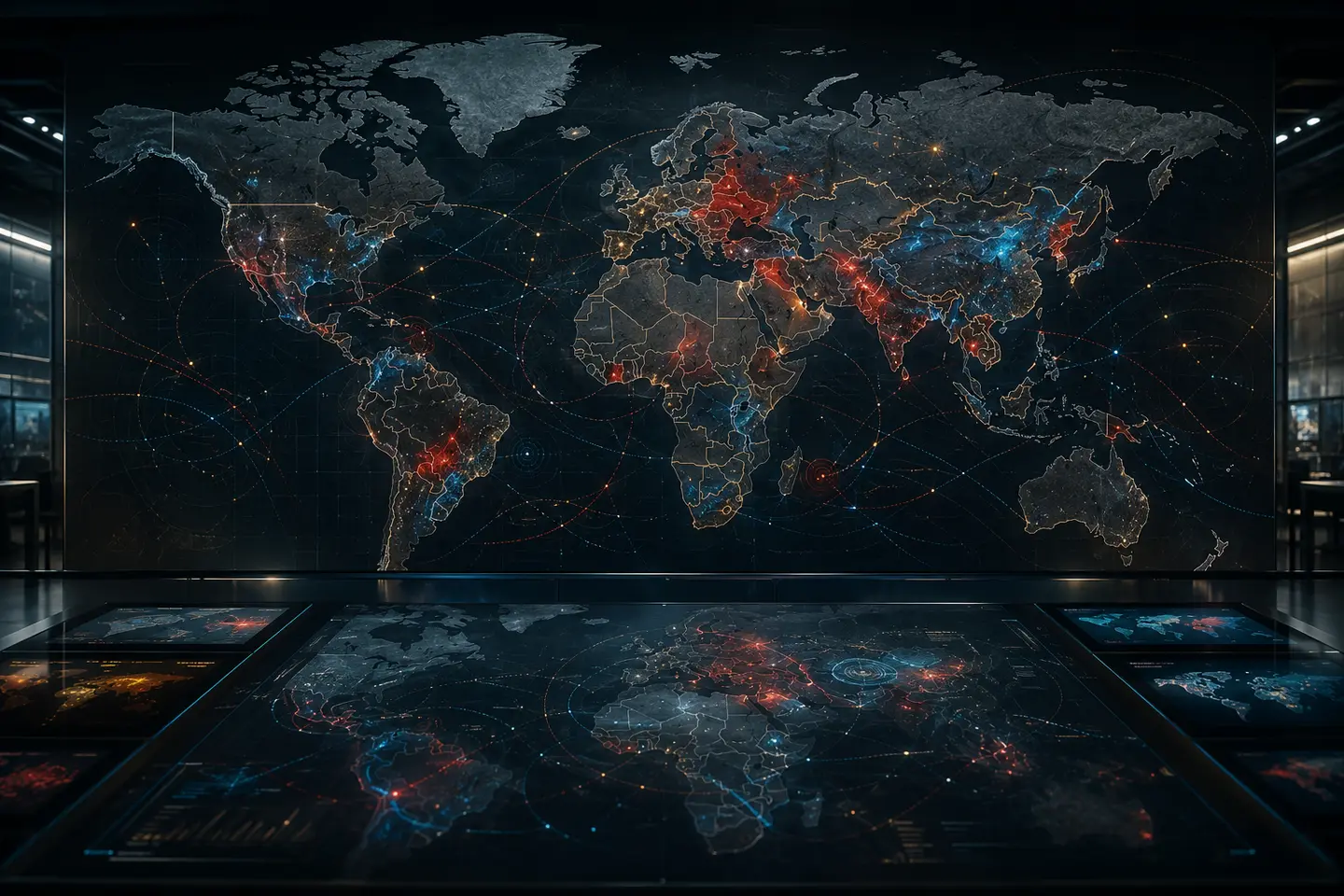
World War Tracker
Look at conflicts together, compare countries and alliances, and keep the source evidence close to the assessment.
This is a research beta. Illustrative records and incomplete coverage are not a live operational intelligence feed.
Map & The Board
Explore the operating picture and inspect connected conflict records.
Open Map & The BoardCountries & Alliances
Connect country profiles, relationships, and alignment records.
Open Countries & AlliancesCompare
Inspect selected records side by side using the same definitions and context.
Open CompareEvidence Desk
Review sources, dates, confidence, and the boundaries between reporting and interpretation.
Open Evidence DeskUnderreported Coverage
Explore coverage gaps and reporting beyond the most visible headlines.
Open Underreported CoverageArchive & Great Game
Move into historical editions and recurring geopolitical competition.
Open Archive & Great Game
Autumn in Ashes
A finished nine-chapter novella, three free opening chapters, and the people and places taking shape around the story.
The free preview is open. Digital editions are still being prepared; the Encyclopedia of Life preview has its own access boundary.
Read the Free Preview
Three complete chapters from the finished nine-chapter novella. No purchase or account is needed to read the preview.
Open Read the Free PreviewPublic Concept Gallery
Explore 123 public pieces in seven sets, including the story’s people, places, and visual language.
Open Public Concept GalleryWorld Files
Explore the setting and the systems surrounding the story.
Open World FilesRelease Information
Follow preparations for the planned ebook and ebook + AI-narrated audiobook bundle. Checkout and audio are not ready yet.
Open Release Information

The Game Room
Original Warcraft projects live here, alongside the queue for game reviews and long-term hardware notes.
The review queue is planned coverage. A title in that queue does not mean its review has been published.
Warcraft Hybrid Guide
Explore confirmed people and mixed lineages, then compare reconstructions and clearly marked theoretical pairings. Canon and speculation stay distinct.
Open Warcraft Hybrid GuideWarcraft: The Living Chronicle
Open the standalone atlas of Warcraft worlds, peoples, histories and lineages.
Open Warcraft: The Living ChronicleGames & Hardware Review Queue
See the games and gear lined up for firsthand reviews, comparisons and ownership notes, with publication still to come.
Open Games & Hardware Review Queue
GrockThis
Stories, signals and rabbit holes worth following outside the Bunker.
The collection opens on Flipboard.
The GrockThis Collection
Browse the mix of world affairs, technology, games, culture and science feeding work across these projects.
Open The GrockThis Collection
Finding Your Way Around
Find a file, follow a project’s progress or dig back through the archive.
The archive keeps older entries available as the projects move on.
Search the Bunker
Look across project files, posts, progress updates and collections by title, subject or keyword.
Open Search the BunkerProject Directory
See each active project, read its overview and follow the work available now.
Open Project DirectoryProject Updates
Follow release notes and substantial changes without losing the earlier working history.
Open Project UpdatesComplete Archive
Browse the permanent record of project files and published transmissions, including entries that have left the front page.
Open Complete Archive